Why clubs need recurring booking features: a practical guide
Why clubs need recurring booking features: a practical guide

Recurring booking features automate repeated court reservations to boost member retention and operational efficiency. They help clubs stabilize revenue, reduce no-shows, and turn casual players into habitual members. Implementing flexible, exception-friendly systems with integrated payment and clear communication enhances member satisfaction and club growth.
Here's the number that should end this argument before it starts.
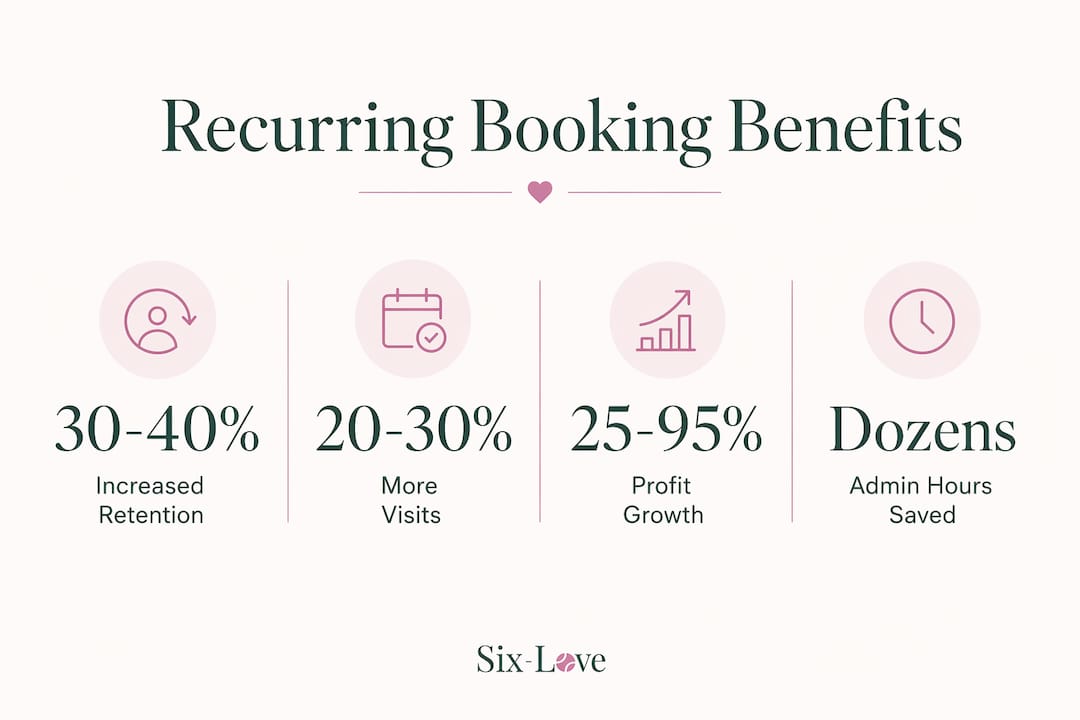
Clubs using recurring booking features see client retention jump 30 to 40% compared to clubs still running ad-hoc, book-it-again-next-week systems. That's not a rounding error. That's the difference between a club that's stable and one that's constantly refilling the same leaky bucket.
So let's talk about why recurring booking features matter for tennis, padel, and pickleball clubs specifically, what a real system needs to do, and where most clubs get the implementation wrong.
Why clubs need recurring booking features for retention and efficiency
Member retention is the foundation of a profitable racquet sports club. A casual player who books sporadically is easy to lose. A member locked into a Tuesday evening padel slot every week becomes a habit-driven regular.

Increasing customer retention by just 5% can boost profits by 25–95%. That range is wide, but even the lower end represents a meaningful shift for a club running on tight margins. Recurring bookings underpin this retention by turning attendance into a routine rather than a decision.
Automated booking systems increase visit frequency by 20–30% and reduce no-shows by establishing clear commitments. Fewer empty courts means better court utilisation and less revenue lost to last-minute cancellations. For a pickleball club with six courts, even a modest reduction in no-shows across peak evening slots adds up to significant recovered income across a season.
The administrative savings are equally real. Recurring bookings save dozens of administrative hours monthly by removing human scheduling errors and manual back-and-forth. Your front desk stops fielding “can I rebook for next Thursday?” calls and starts focusing on member experience instead.
When we introduced our system to the Estepona Pickleball Club, bookings skyrocketed within just a few months. The very simple reason was that it was easy for players to see which courts, tournaments, group events or coaches were available or just find a suitable player to play with. And they could do it all without waiting for club opening hours, or calling up and asking.
Pro Tip: Set automated SMS or email reminders 24 hours before each recurring session. Clubs that do this report a measurable drop in no-shows without any additional staff effort.
The habit-forming nature of recurring bookings also works psychologically. Recurring bookings turn casual players into habitual members, which is the foundation of long-term club success. A tennis player who attends every Saturday morning for three months is far less likely to cancel their membership than one who books irregularly.
How recurring scheduling stabilises revenue and supports club growth
Predictable income changes how you run a club. When you know that a fixed percentage of next month’s revenue is already secured, you can hire a second coach, resurface a court, or invest in new equipment without gambling on uncertain demand.
The Six-love system enables club admins to look at booking history month by month, or any customer period they want. It is also possible to quickly isolate event types, tournaments, coaches and more by revenue. They can easily identify trends and growth. This makes it significantly easier to predict future income for any club overall, or even a particular event type.
When 40–60% of monthly revenue becomes predictable through recurring bookings, clubs can plan confidently for staffing and investment. That shift from reactive anxiety to confident planning is one of the most underappreciated benefits of recurring scheduling. A padel club that previously scrambled to fill slots each week operates very differently once half its court time is pre-sold.
The growth data support this strongly. Service businesses integrating automated booking systems experienced average year-on-year growth of 37%, with some reporting revenue increases up to 120%. Six-love clients have reported an average 22% revenue increase within just two months of implementation, which aligns with this broader pattern of rapid gains once recurring systems are in place.
Incidentally, our club in Estepona significantly surpassed the average, seeing a 110% revenue growth in under 5 weeks.
Standing weekly slots radically improve schedule predictability and income stability, which is crucial for club planning and growth. A tennis club with 40 members on standing weekly bookings knows its baseline revenue before the month begins. That certainty makes every other business decision easier.
Pro Tip: Synchronise your payment cadence with your booking cadence. If members book weekly, charge weekly or in four-week blocks. Mismatched billing cycles create reconciliation headaches and undermine the automation benefits you are trying to achieve.
What features does an effective recurring booking system need?
Not all recurring booking tools are built equally. A system that handles simple weekly repeats but falls apart when a member needs to skip one session will frustrate members and create more admin work, not less.
Flexible recurrence rules
Effective recurring booking systems offer flexible recurrence rules including weekly, biweekly, monthly, and custom intervals, plus end conditions such as session counts or fixed dates. A pickleball club running a six-week beginner programme needs different settings than a tennis member booking a permanent Wednesday morning slot. Your system must handle both without workarounds.
Exception handling without cancelling the series
Recurring systems must allow members to skip or reschedule individual sessions without cancelling the entire series. This is non-negotiable. Failing to allow single-session skipping causes member frustration and increases manual administrative burden. A member who cannot skip one session without losing their standing slot will simply cancel the whole booking.
We introduce member match and coach rescheduling. This enables the member to find available slots for their game or coaching session, without having to contact the admin. It's more convenient for the player, the coach and the club overall. Often players just cancel, as it's too much hassle to rearrange something. At a club using our system, they can just click reschedule, and the correct available slots are shown to them, also considering coaches' schedules when applicable. This reduces cancellations significantly.
Payment and booking integration
Integrating booking cadence with payment models reduces manual reconciliation and administrative workload. Your system should support per-session charging, prepaid session packages, and subscription billing. Clubs that offer all three give members the flexibility they want while keeping their own accounts clean.
Automated reminders and calendar syncing deserve particular attention. Recurring appointments build higher trust with members who value their time, and a system that syncs with Google Calendar or Apple Calendar reinforces that professionalism every time a member checks their phone.
How to implement recurring bookings in your tennis, padel, or pickleball club
Implementation succeeds or fails based on preparation. Clubs that rush the rollout without auditing their current processes often end up with a system that automates the wrong things.
Start by mapping your existing booking and payment workflows. Identify where manual steps create delays, errors, or member frustration. Common gaps include phone-based rebooking, manual payment chasing, and no-show tracking done on spreadsheets. These are the exact processes that recurring booking automation replaces.
Once you have identified the gaps, follow these steps:
Start with one court type or programme. Launch recurring bookings for your most popular court format first, whether that is padel doubles, tennis coaching sessions, or pickleball open play. Learn what works before rolling out across the whole club.
Set up flexible recurrence options from day one. Configure weekly, biweekly, and monthly options even if most members initially choose weekly. Having the options available prevents a second round of system changes later.
Train your team before you communicate to members. Staff who understand the system answer member questions confidently. Staff who are confused create distrust in the new process.
Communicate the member benefits clearly. Tell members they will never lose their favourite slot, that skipping one session is simple, and that payment happens automatically. Frame it as a convenience, not a commitment.
Monitor usage and adjust for exceptions. Review recurring booking data monthly. Flag holiday periods in advance, set blackout dates for court maintenance, and check whether any members are repeatedly skipping sessions. That last pattern often signals a member at risk of leaving.
Pro Tip: Build a short FAQ for members before launch. Answer the three questions you know they will ask: how to skip a session, how to cancel the series, and how billing works. Proactive communication prevents a flood of support queries in the first week.
Key takeaways
Recurring booking features are the single most effective tool tennis, padel, and pickleball clubs have for securing predictable revenue, reducing no-shows, and turning occasional players into loyal, habitual members.
Retention impact - Recurring systems increase client retention by 30–40% compared to ad-hoc booking models
Revenue predictability - Locking in 40–60% of monthly revenue through standing bookings removes cash flow uncertainty.
Exception handling - Members must be able to skip single sessions without cancelling their series to avoid frustration.
Payment integration - Syncing billing cadence with booking frequency eliminates manual reconciliation work.
Implementation order - Audit current workflows first, then launch with one court type before scaling across the club.
What I have learned from watching clubs adopt recurring bookings
The clubs that get the most from recurring booking features are not necessarily the ones with the most members. They are the ones that treat the system as a member experience tool, not just an admin shortcut.
I have seen padel clubs with 80 members outperform larger clubs on retention simply because their standing booking system made members feel valued and secure in their slot. The psychology matters. When a member knows their Thursday evening court is theirs every week without lifting a finger, they stop shopping around. That sense of ownership is worth more than any loyalty programme.
The most common mistake I see is clubs choosing a system that handles simple repeats but cannot manage exceptions gracefully. A member who goes on holiday for two weeks and cannot pause their booking without cancelling entirely will not renew. Rigid systems that look good in a demo often create the exact frustration they were supposed to prevent.
The second mistake is separating payment from booking. Clubs that run their scheduling in one system and their billing in another spend hours each month reconciling the two. The dynamic scheduling approach that works best treats booking and payment as a single workflow, not two parallel processes.
My honest advice: prioritise member self-service above everything else. If a member can skip a session, reschedule, and check their upcoming bookings from their phone without calling the club, you have built something genuinely useful. If they still need to ring the front desk for any of those tasks, the system is not finished yet.
— Darren
How Six-love supports recurring bookings for racquet sports clubs
Six-love builds bespoke court reservation systems specifically for tennis, padel, and pickleball clubs, with recurring booking and payment features built into the core platform rather than bolted on as an afterthought.
The platform handles flexible recurrence rules, single-session exception management, and automated reminders within one system. Payment cadence syncs directly with booking schedules, which removes the reconciliation burden that plagues clubs using separate tools. Six-love clients have reported a 22% revenue increase within two months of going live, driven in part by the predictable income that standing bookings create. Whether you run a tennis booking system, a padel club, or a pickleball facility, Six-love’s white-label approach means the platform carries your club’s identity, not ours. Visit six-love.net to see how the system fits your club’s specific needs.
FAQ
What are recurring booking features in a sports club?
Recurring booking features are automated systems that schedule and confirm repeat court reservations for members without requiring a new booking each time. They typically include flexible recurrence rules, exception handling, and integrated payment processing.
How do recurring bookings improve member retention?
Recurring appointment systems increase retention by 30–40% by turning attendance into a habit rather than a weekly decision. Members with standing slots are significantly less likely to lapse or cancel their membership.
Can members skip a session without losing their recurring slot?
Yes, provided the system is configured correctly. Effective recurring systems allow members to skip individual sessions without cancelling the entire series, which is critical for maintaining member satisfaction.
Why should clubs automate bookings rather than manage them manually?
Automated booking removes human error, reduces no-shows, and saves dozens of administrative hours each month. It also projects professionalism, which builds member trust and encourages long-term commitment to the club.
How quickly can recurring bookings affect club revenue?
The impact is rapid. Service businesses using automated booking systems have reported average year-on-year growth of 37%, and Six-love clients have seen a 22% revenue increase within two months of implementation.
Recommended
Frequently Asked Questions
What are recurring booking features in a sports club?
Recurring booking features are automated systems that schedule and confirm repeat court reservations for members without requiring a new booking each time. They typically include flexible recurrence rules, exception handling, and integrated payment processing.
How do recurring bookings improve member retention?
Recurring appointment systems increase retention by 30–40% by turning attendance into a habit rather than a weekly decision. Members with standing slots are significantly less likely to lapse or cancel their membership.
Can members skip a session without losing their recurring slot?
Yes, provided the system is configured correctly. Effective recurring systems allow members to skip individual sessions without cancelling the entire series, which is critical for maintaining member satisfaction.
Why should clubs automate bookings rather than manage them manually?
Automated booking removes human error, reduces no-shows, and saves dozens of administrative hours each month. It also projects professionalism, which builds member trust and encourages long-term commitment to the club.
How quickly can recurring bookings affect club revenue?
The impact is rapid. Service businesses using automated booking systems have reported average year-on-year growth of 37%, and Six-love clients have seen a 22% revenue increase within two months of implementation.