Racquetball tennis: key differences and crossover guide
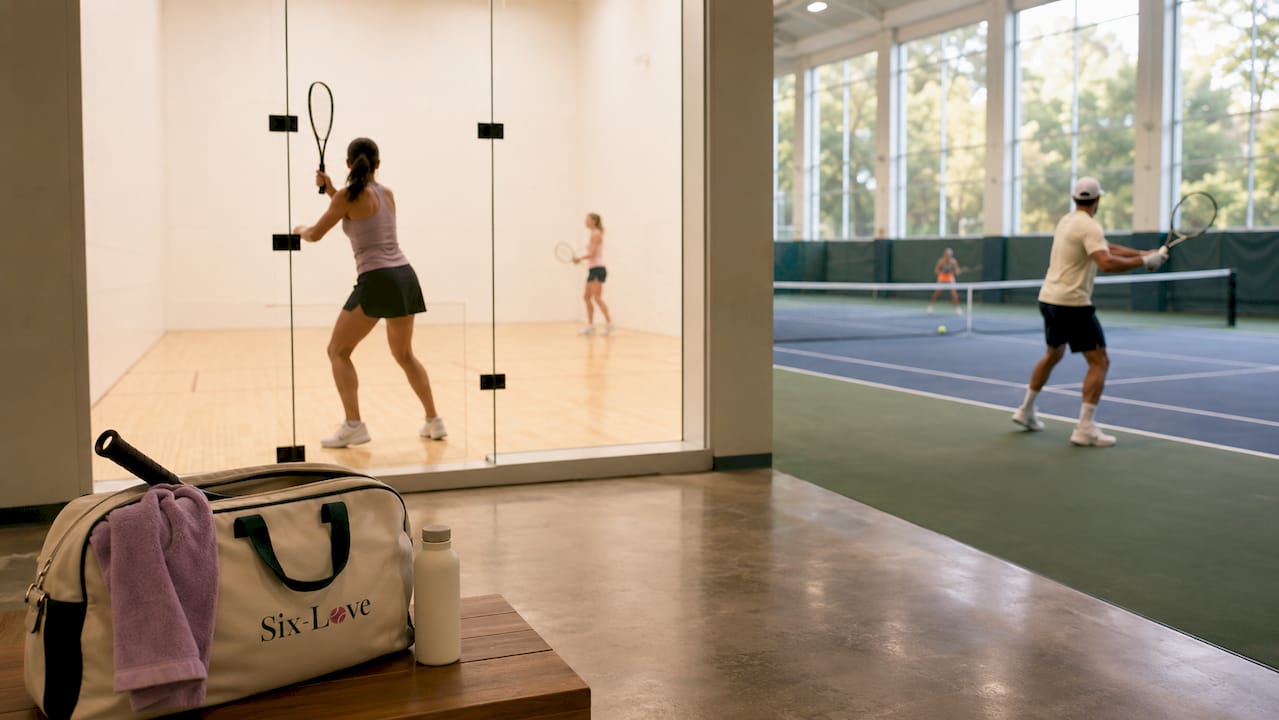
Racquetball and tennis are two distinct racquet sports that share a common ancestor but diverge sharply in court design, equipment, rules, and physical demands. Players who understand both sports gain a real tactical edge, whether they are cross-training, choosing a new discipline, or managing a multi-sport facility. The term “racquetball tennis” captures the growing conversation around these two games and how their communities increasingly overlap, particularly as shared facilities and 2026 equipment innovations bring them closer together. This guide covers every major difference and connection between the two sports so you can make informed decisions on and off the court.
1. How do racquetball and tennis courts differ?
The court is where the two sports diverge most dramatically. A racquetball court measures 40 x 20 feet and is fully enclosed, with all four walls and the ceiling in play. A tennis court for doubles measures 78 x 36 feet and is open to the air, divided by a net, with no walls involved in live play.
That difference in environment changes everything about how you move and think. In racquetball, you must track the ball across multiple rebound surfaces simultaneously. In tennis, the ball leaving the court boundaries ends the point immediately.
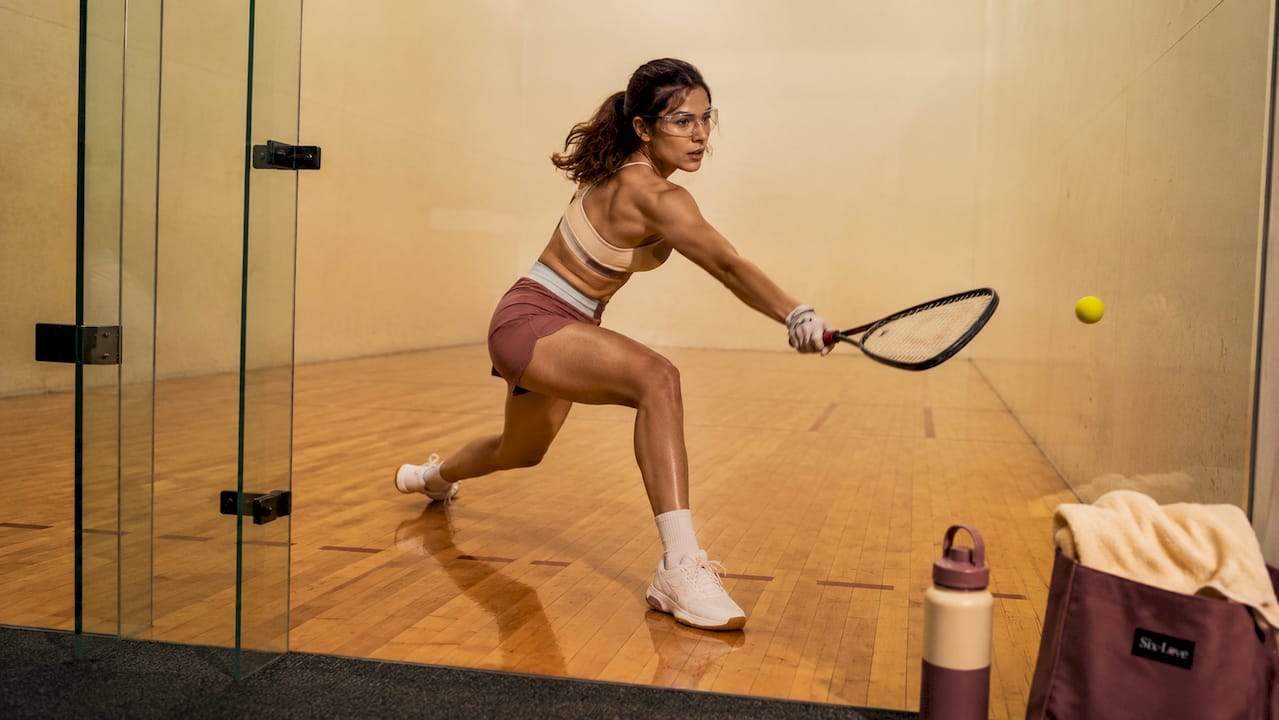
Here is a direct comparison of the two court environments:
| Feature | Racquetball | Tennis |
|---|---|---|
| Court size | 40 x 20 ft | 78 x 36 ft (doubles) |
| Enclosure | Fully enclosed | Open air |
| Walls in play | All four walls and ceiling | None |
| Net | No net | Net divides court |
| Surface | Hardwood or synthetic | Hard, clay, or grass |
Movement patterns reflect these differences directly. Racquetball players pivot constantly, reading angles off back and side walls. Tennis players cover longer linear distances, relying on split-step footwork and court positioning relative to the baseline and net.
Safety rules also diverge. Protective eyewear is mandatory in racquetball because ball speeds can reach 240–260 km/h in an enclosed space. Recreational tennis carries no such requirement. The ball in racquetball is also dangerously close in size to the human eye socket, which is why the rule exists under official governing body standards, not merely as a precaution.
2. Equipment differences: rackets and balls
Racquetball rackets are shorter, lighter, and built for rapid wrist action in tight spaces. Racquetball rackets max out at 22 inches and weigh between 140–185 grams. They also require a mandatory wrist tether to prevent the racket flying loose in an enclosed court. Tennis rackets are longer, heavier, and built to generate power across a much larger court.
String tension differs too. Racquetball frames require high string tension of 28–34 lbs, with stiff frames often reinforced by boron fibre to meet the sport’s fast, precise demands. Tennis rackets use a wider range of tensions depending on playing style, typically 45–65 lbs, and prioritise a larger hitting surface for spin and power.
The balls are equally different. Racquetball uses a small, hollow rubber ball that rebounds sharply off hard surfaces. Tennis uses a larger, pressurised felt ball that behaves very differently on each surface type, from clay to grass to hard court.
One major development in 2026 is worth noting. Dual-tube frame technology originally developed for tennis rackets is now being adapted for racquetball, boosting power and control by 15–20%. This technology improves string tension stability and swing speed without adding weight, which is a genuine shift for racquetball racket design.
Pro Tip: If you play both sports, do not assume your tennis swing will transfer directly. Racquetball demands a shorter, sharper stroke. Practise wrist snap drills separately to build the right muscle memory.
3. Rules and scoring: how each sport keeps score
Racquetball and tennis use completely different scoring systems, and that shapes the pace and psychology of each game. Racquetball uses side-out scoring, where only the server can win a point. Games go to 15 points. Tennis uses the traditional 15/30/40/game system, where either player can win a point on any rally.
The serve rules also differ fundamentally. In racquetball, the server hits the ball off the front wall to begin play. In tennis, the server must send the ball over the net and into the service box diagonally opposite. A fault in tennis ends the serve attempt; in racquetball, certain faults result in a side-out rather than a lost point.
Live wall play in racquetball extends rallies significantly. Racquetball rallies continue as long as the ball contacts any legal surface before bouncing twice. Tennis rallies end the moment the ball leaves the court or hits the net. This makes racquetball rallies feel more continuous and physically relentless.
Match formats differ too. Racquetball is predominantly a singles sport, though doubles exists. Tennis is equally prominent in both singles and doubles formats, with doubles requiring distinct positioning and communication strategies that racquetball doubles rarely demands at club level.
4. Physical demands and playing techniques
Tennis and racquetball test your body in different ways, and understanding that distinction helps you train smarter for either sport. Tennis demands aerobic endurance and complex stroke mechanics across a large court. Rallies can last many seconds, requiring sustained cardiovascular output and precise footwork over long distances.
Racquetball is built on explosive anaerobic bursts. Points are shorter but more intense, with players making rapid directional changes in a confined space. The sport also demands three-dimensional spatial awareness because the ball can arrive from any wall at any angle. That is a skill tennis simply does not develop.
Many tennis players who transition to racquetball struggle with live wall rebounds. In tennis, a ball heading toward a wall is a lost point. In racquetball, it is the beginning of the next shot. Rewiring that instinct takes deliberate practice.
Racquetball is also faster to pick up for beginners. New players can rally from their very first session because the enclosed court keeps the ball in play naturally. Tennis requires mastering the serve, footwork, and stroke mechanics before consistent rallying becomes possible. That lower entry barrier makes racquetball attractive for players who want immediate engagement.
Pro Tip: Tennis players moving to racquetball should spend their first few sessions simply watching the ball rebound off the back wall without attempting to hit it. Building that spatial map in your mind is the single fastest way to accelerate your racquetball development.
5. Choosing between racquetball and tennis: situational factors
The right sport depends on your goals, your location, and the facilities available to you. Indoor racquet sports like racquetball offer a clear weather advantage. You can play year-round regardless of rain, wind, or cold. Tennis, particularly on outdoor courts, is subject to seasonal disruption in most of the UK and northern Europe.
Shared facilities are increasingly common. Facility operators report stronger return on investment by hosting multiple racquet sports under one roof. A club that offers both tennis and racquetball courts attracts a broader membership base and keeps players engaged across different seasons and fitness goals.
For players considering which sport suits them best, here are the key factors:
- Age and fitness level: Racquetball’s shorter, more explosive format suits players who prefer high-intensity intervals. Tennis suits those who enjoy sustained aerobic effort and longer match formats.
- Social environment: Tennis has a larger global community and more structured club competition. Racquetball offers a tighter-knit community with a strong culture of casual competitive play.
- Equipment cost: Racquetball equipment is generally less expensive to start with. A quality racket and a tube of balls costs significantly less than a full tennis setup.
- Court availability: Tennis courts are more widely available in the UK. Racquetball courts are concentrated in multi-sport leisure centres and specialist clubs.
- Cross-training value: Playing both sports builds a broader athletic base. The dynamic scheduling that modern clubs use makes it easier than ever to book time across multiple court types.
Key takeaways
Racquetball and tennis share racquet sports origins but demand entirely different skills, equipment, and court environments, making them genuinely complementary rather than interchangeable.
| Point | Details |
|---|---|
| Court environment | Racquetball uses a 40 x 20 ft enclosed court; tennis uses a 78 x 36 ft open court with a net. |
| Equipment design | Racquetball rackets are shorter and lighter, with mandatory wrist tethers and higher string tension. |
| Scoring systems | Racquetball uses server-only side-out scoring to 15; tennis uses the 15/30/40/game format. |
| Physical demands | Racquetball builds explosive anaerobic power; tennis develops aerobic endurance and stroke mechanics. |
| 2026 equipment trend | Dual-tube frame technology from tennis is now improving racquetball racket power and control by 15–20%. |
A racquet sports player’s honest perspective
I have spent years watching players move between tennis and racquetball, and the most common mistake I see is assuming the skills transfer automatically. They do not. The footwork patterns are different, the swing mechanics are different, and the spatial thinking required is almost opposite.
What does transfer is competitive instinct and hand-eye coordination. A seasoned tennis player who commits to learning racquetball’s wall geometry will progress faster than a complete beginner. But that commitment has to be genuine. Too many tennis players treat racquetball as a casual winter alternative and never develop the spatial awareness that makes the sport genuinely rewarding.
The 2026 equipment crossover is the most exciting development I have seen in years. Dual-tube frame technology moving from tennis into racquetball racket design is not a gimmick. It genuinely changes what is possible in terms of power and control at the same weight. Players who invest in updated equipment will notice the difference within a few sessions.
My strongest recommendation for any racquet sports enthusiast is to try both sports seriously, not just casually. The complementary skills you build will make you a better athlete across the board. Clubs that embrace both sports and manage multi-sport venues well are the ones where players develop fastest and stay longest.
— Darren
How Six-love supports multi-sport racquet clubs
Running a club that offers both tennis and racquetball courts requires scheduling precision that generic booking tools cannot provide. Six-love’s tennis court booking software is built specifically for racquet sports venues, with the flexibility to manage multiple court types, membership tiers, and peak-hour demand in one place.

Six-love clients have reported a 22% revenue increase within two months of implementation. The platform’s real-time analytics give club managers clear visibility over which courts are in demand, when, and by whom. For clubs riding the 2026 racquet sports boom, that operational clarity is what separates a thriving venue from one that is constantly firefighting booking conflicts. Six-love’s customisable court reservation system adapts to your club’s specific layout and membership structure, whether you run two tennis courts or a full multi-sport facility.
FAQ
What is the main difference between racquetball and tennis?
Racquetball is played in a fully enclosed 40 x 20 ft court where all walls and the ceiling are in play, while tennis is played on a larger open court divided by a net. The enclosed environment makes racquetball faster and more spatially demanding.
Is racquetball easier to learn than tennis?
Racquetball is generally easier to pick up for beginners because the enclosed court keeps the ball in play naturally, allowing new players to rally from their first session. Tennis requires mastering the serve and footwork before consistent play becomes possible.
Can tennis players use their skills in racquetball?
Hand-eye coordination and competitive instinct transfer well, but the stroke mechanics, footwork patterns, and spatial awareness required in racquetball are fundamentally different from tennis. Most tennis players need dedicated practice to master live wall rebounds.
What equipment do I need to start playing racquetball?
You need a racquetball racket (maximum 22 inches, with a mandatory wrist tether), a hollow rubber ball, and protective eyewear, which is mandatory under official rules. The total cost of entry-level equipment is typically lower than a comparable tennis setup.
Are racquetball and tennis courts ever shared in the same facility?
Shared multi-sport facilities are increasingly common, particularly in 2026 as the racquet sports boom encourages clubs to maximise court usage. Facility operators report stronger returns by hosting both sports under one roof, attracting a wider membership base year-round.
Recommended
- General · Six-Love Blog
- The Hub · Six-Love | Insights for Racquet Clubs
- Court reservation Systems | Fully Customized | Six-Love
- Court reservation Systems | Fully Customized | Six-Love
Frequently Asked Questions
What is the main difference between racquetball and tennis?
Racquetball is played in a fully enclosed 40 x 20 ft court where all walls and the ceiling are in play, while tennis is played on a larger open court divided by a net. The enclosed environment makes racquetball faster and more spatially demanding.
Is racquetball easier to learn than tennis?
Racquetball is generally easier to pick up for beginners because the enclosed court keeps the ball in play naturally, allowing new players to rally from their first session. Tennis requires mastering the serve and footwork before consistent play becomes possible.
Can tennis players use their skills in racquetball?
Hand-eye coordination and competitive instinct transfer well, but the stroke mechanics, footwork patterns, and spatial awareness required in racquetball are fundamentally different from tennis. Most tennis players need dedicated practice to master live wall rebounds.
What equipment do I need to start playing racquetball?
You need a racquetball racket (maximum 22 inches, with a mandatory wrist tether), a hollow rubber ball, and protective eyewear, which is mandatory under official rules. The total cost of entry-level equipment is typically lower than a comparable tennis setup.
Are racquetball and tennis courts ever shared in the same facility?
Shared multi-sport facilities are increasingly common, particularly in 2026 as the racquet sports boom encourages clubs to maximise court usage. Facility operators report stronger returns by hosting both sports under one roof, attracting a wider membership base year-round.